 HopNews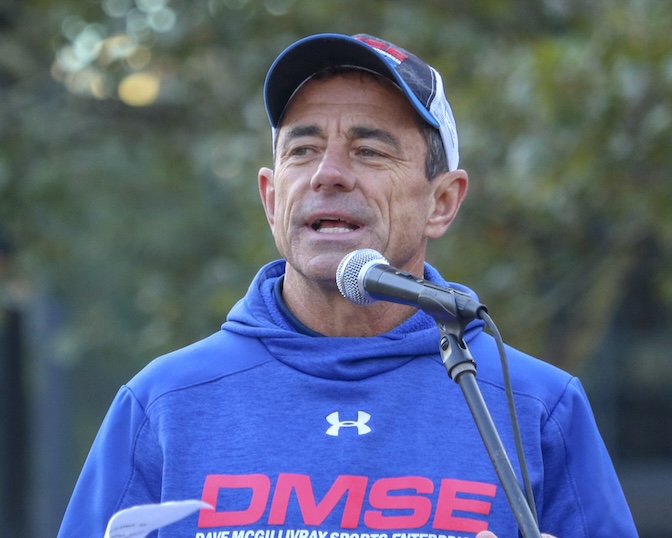
Legacy as Responsibility
As the Boston Marathon approaches its 130th anniversary, Dave McGillivray does not define legacy by ownership. He defines it by responsibility. “This will be my 54th year running the race,” he said. “I’ve been involved in it almost half the time it’s been in existence. It’s in my DNA.”
McGillivray, who served as race director from 2001 to 2022 and now continues as senior advisor, has spent decades guiding one of the most iconic sporting events in the world. Yet he consistently downplays his role.
“I’ve just been a caretaker,” he said. “It was here long before I was born, and it will be here long after I’m gone. I’m just helping to take care of it for a while.”
The Caretaker’s Philosophy
That philosophy shaped his leadership. Preserve tradition but adapt when necessary.
“We always want to maintain the traditional aspects of the race,” he said. “That’s what makes Boston, Boston. But you also must look at what makes sense today versus what made sense 100 years ago.”
Preserving Tradition, Embracing Change
That balance led to meaningful changes. The race start moved earlier to reduce heat risk. Wave starts were introduced to manage growing participation without compromising the experience. “My job has always been about two things, time and space,” he said. “With Boston, we don’t have much of either.”
Those limitations remain part of the race’s identity. The narrow roads, the eight towns, and the shared effort required to stage the marathon reinforce its character and its prestige.
“The Boston Marathon has always been about the pursuit of athletic excellence,” McGillivray said. “It’s the most prestigious marathon in the world.”
Earning Your Place in Hopkinton
Still, prestige alone does not explain Boston’s emotional pull. For McGillivray, that begins in Hopkinton. “I want runners to feel that they’ve earned the right,” he said. “They’ve done the work. They’ve trained over 1,000 miles. The toughest part is behind them.” That sense of belonging extends beyond time qualifiers to the thousands of charity runners who line up each year.
“They train just as hard,” McGillivray said. “And on top of that, they’re raising significant funds for important causes.”
He often points to the late Susan Hurley of CharityTeams, who described those runners not as exceptions, but as “overqualified.” He said, “They’re doing more, and they deserve to be there.”
The experience is shaped not only by runners, but by the communities along the course. “The spectators know what to say and when to say it,” he said. “They understand how to support runners.”
The Power of Boston Spectators
He recalls the heat of 2012, when residents handed out water and ice from their own homes. “They helped runners get through that day. That’s Boston.”
Moments like those define the race’s impact. “For many, it’s life-changing,” McGillivray said. “When people finish the Boston Marathon, it raises their self-esteem and confidence. They feel they can do almost anything.”
That belief traces back to his own childhood. Growing up in Massachusetts, McGillivray dreamed of playing second base at Fenway Park, but he was often cut from teams. “I learned rejection at a very young age,” he said. “Running gave me something different. No one could cut me from running.”
Endurance Achievements
That choice shaped a lifetime of endurance and achievement. McGillivray has run more than 170 marathons, including more than five decades of consecutive Boston Marathons, and logged over 165,000 miles. He has completed the Ironman World Championship in Hawaii 10 times and taken on extreme endurance challenges, including 24-hour efforts in running, cycling, and swimming.
In 1978, he ran 3,452 miles across the United States in 80 days, raising money for cancer research and helping pioneer the connection between endurance sports and charitable giving.
He has also faced significant personal challenges. Several years ago, he was diagnosed with severe coronary artery disease and underwent triple bypass surgery. Within six months, he returned to the Boston Marathon finish line, a testament to the same resilience he encourages in others.
Fulfilling the Fenway Dream
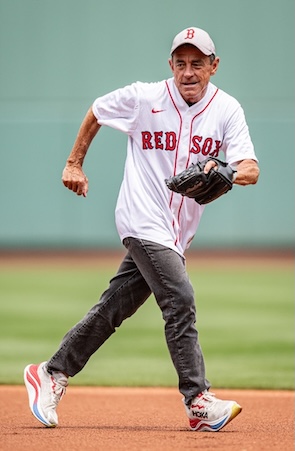
Decades after being cut from teams as a child, his original dream resurfaced in an unexpected way. The Boston Red Sox invited him to Fenway Park, where he took the field at second base before a game. Manager Alex Cora hit ground balls to him at second base, fulfilling the goal he had carried since he was a boy.
“It took me 160,000 miles and 60 years to finally play second base,” McGillivray said. “But I did.” As he left the field, they handed him the base itself. “I tell people I stole second,” he said.
The moment reflects a theme that runs through his life and through Boston itself. Goals do not always unfold as planned, but persistence creates its own path. “You might not accomplish it the way you originally hoped,” he said. “But there’s always another way to get there.”
That mindset continues to shape his work beyond the marathon.
Beyond the Marathon Empire
McGillivray is the founder of DMSE Sports, an event management and consulting firm that has directed or advised more than 1,400 events worldwide, including the Boston Marathon, U.S. Olympic Marathon Trials, and major international competitions.
He also founded the Dave McGillivray Finish Strong Foundation, which focuses on youth development through fitness, literacy, and service. He has written a series of children’s books, including Dream Big, Running Across America, and Finish Strong, which anchor the foundation’s mission. Its “Dream Big Marathon” challenges children to read 26 books, run 26 miles, and complete 26 acts of kindness.
“For me, running gave me a chance,” he said. “I want to give that same chance to other kids.”
Running with the Next Generation
As Boston prepares for its 130th running, McGillivray remains closely connected to the race. This year, after helping send off the field, he will step in himself, running alongside three of his five children.
It is a fitting image. A man who has spent decades guiding the race from the front, choosing to experience it again from within, alongside the next generation.
He may describe himself as a caretaker, but his influence is embedded in every mile. And as runners gather in Hopkinton to begin their journey to Boston, his philosophy endures.
Do the work. Earn the right. Stay the course. Finish strong.
— Maria Bendeck
Dr. Maria Bendeck is a board-certified internal medicine physician, freelance writer, world traveler, avid marathon runner, and community builder. She believes in embracing life to the fullest by exploring new places, helping others, and empowering people through writing.



0 Comments