 HopNews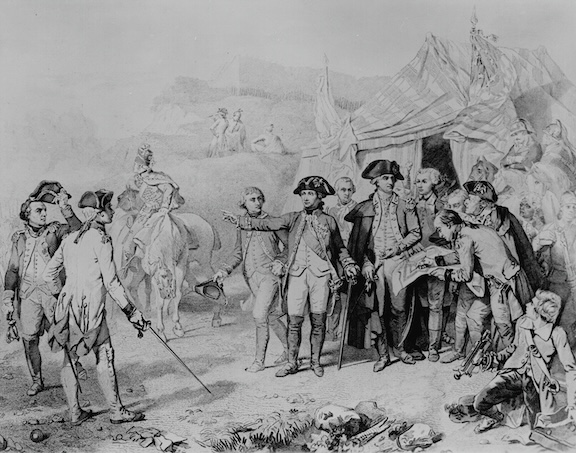
You don’t have to be a history buff to get hooked by Ken Burns’ latest PBS documentary. “The American Revolution” isn’t just another retelling. It’s television that grabs you, shakes off the dust, and makes the past feel freshly complicated—like you’re peeking into your own family’s wildest secrets.
Burns has a gift for this. From “The Civil War” to “Baseball” and “The Vietnam War,” he’s mastered the art of bringing history alive. This time, he turns his lens to the birth of America, and what you get isn’t just a history lesson—it’s something much messier, more intimate, and far more human than you ever learned in school.
Forget What We Learned in History Class
Forget the rote memorization of dates and battles. Burns digs into the chaos, the doubts, the failures, and the wild hopes that shaped the Revolution. He brings old paintings to life, and mixes in voices you don’t often hear. It’s the ordinary farmers, enslaved people hoping for freedom after all the fighting, women holding families and businesses together, Indigenous nations fighting to survive.
These aren’t just names in a textbook. They’re real people, full of contradictions and questions, stumbling toward something nobody had ever tried before. Why should you watch? Because the arguments that divided the Founders—liberty or security, individual rights or the common good, who counts as “one of us”—are still with us.
Nobody Knew How It Would End
To fully understand how the Patriots, those who wanted freedom from Great Britain, felt and thought, you must forget what we know about how it ended. Imagine how frightening and challenging it was for our ancestors to decide to fight for freedom. And we need to understand that the fighting didn’t end on July 4, 1776, far from it.
Watching “The American Revolution” is like looking in the mirror and seeing the roots of today’s debates staring right back. Burns knows how to build suspense. Despite knowing the outcome, you’ll find yourself pulled into the uncertainty—will Washington’s army make it through another brutal winter? Can the Continental Congress hold itself together? The story is gripping, and it refuses to let you coast on the myths you learned as a kid.
Instead, it tears them down and replaces them with a story that’s richer, grittier, and, honestly, more inspiring because it’s real. And when the credits roll, you won’t want to keep your questions to yourself.
Enter Chuck Joseph
Joseph recently completed a six-week intensive on the Revolution at the Hopkinton Historical Society. Like Burns, he digs into the uncomfortable truths and hidden stories that textbook history skips over. We got to see the Revolution through the eyes of enslaved people, women, native peoples, and regular citizens whose lives shaped history just as much as those of generals and politicians.
Beginning on December 1, the Historical Society is hosting a discussion for anyone who’s watched the new documentary. Chuck Joseph will be there to help unpack what you’ve seen, dig into the hard questions, and connect the dots between the Revolution and the world we live in now.
It’s a chance to move past the surface, to wrestle with the real, tangled story of how America came to be. You don’t need expertise. You need curiosity—and maybe a willingness to rethink what you thought you knew. The American Revolution isn’t just a series of historical events. It’s an argument we’re still having about who we are and who we want to become. Ken Burns opens that conversation.
Community Discussions About the Film, led by Chuck Joseph
Don’t wait to register for these free discussions held at the Historical Society, 168 Hayden Rowe (seats filling up fast). Register Here
The schedule is as follows:
- Dec.1, 6:30 – 8:00p – focus on episodes 1 & 2 of the documentary
- Dec. 8, 6:30 – 8:00p – focus on episodes 3 & 4
- Dec. 15, 6:00 – 8:00p – focus on episodes 5 & 6


Just finished watching it, excellent. My understanding of the revolution has deepened, and I have a new appreciation of the brutal fighting and many sacrifices that brought us to democracy. Let’s now endeavor to keep it.
Why not Zoom the Historical Society discussion so that we who cannot attend in person might be able to listen and perhaps add some valuable insights?