 HopNews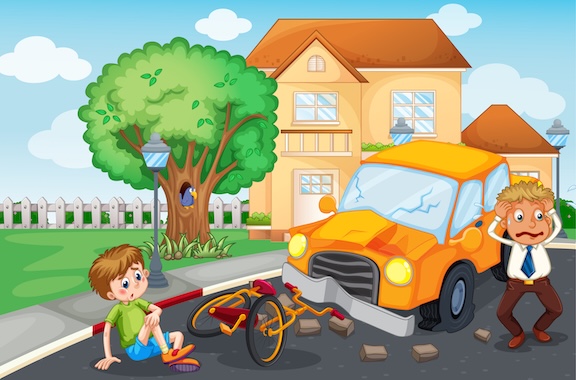
We’re always rushing and running late for work, speeding to pick up the kids, and squeezing in one more errand. We barely notice how fast we’re moving, even in the places that should feel the safest—right outside our own front doors. But here’s the hard truth: every year in America, thousands of kids get hurt in their own driveways.
It is Happening Everywhere
The numbers from the National Safety Council are sobering—about 15,000 people get injured in back-over accidents every year, and a lot of them are children under five. What makes it even worse is that, almost every time, the person behind the wheel is someone the child knows—a parent, grandparent, or neighbor.
The math isn’t complicated, but we act like it doesn’t exist. A kid on a bike rolls along at about 8-10 miles an hour. A car backing up—even slowly—doesn’t stop that fast, and you can’t see everything behind you. Start hurrying, get distracted, or just don’t pay attention, and the risk shoots up.
It Happened in Hopkinton on September 30!
A five-year-old boy was hit by a car in Legacy Farms North after returning home from kindergarten. While riding his bike on the sidewalk in his neighborhood, he crossed a neighbor’s driveway. At the same time, the neighbor rapidly backed out of the garage. The car struck the boy from behind with enough force to knock him off his bike.
The child suffered a concussion, was bleeding heavily from his cheek, and his eyes were swollen. The details of what followed are now part of an ongoing legal case. Fortunately, the car that struck him was a Tesla, which automatically stopped before running him over. The boy was also wearing a helmet, which likely prevented more serious injuries.
The Trap of Familiarity
Neighborhood streets feel safe. We drive them every day, so we stop thinking about the danger. That’s when mistakes happen. Even with all the cameras and sensors in modern cars, blind spots are still huge. Some SUVs can’t even see objects under three feet tall directly behind them. A little kid on a bike can vanish from view completely. Let’s be real: the tech isn’t the main problem. We are.
Always in a Hurry
We tell ourselves every second counts. That text can’t wait, that meeting’s too important, we’ve got to get to the store before it closes. We’re always behind. But nothing on your to-do list matters more than a child’s life. Not your job, your errands, or your schedule. Nothing. When you roar out of your driveway at 15 or 20 miles an hour because you’re late, you’re making a choice—even if you don’t realize it. You’re betting that your timeline is worth more than a kid’s safety. That’s not dramatic. That’s just the reality.
What Happens Afterwards
Driveway accidents leave real scars. Broken bones, head injuries, extended hospital stays. Some kids don’t recover. But it’s not just about physical pain. When a neighbor hits a child, even by accident, trust in the community cracks. Neighbors stop talking. People argue and blame. Lawsuits pop up. Suddenly, it’s not a community anymore—it’s just a collection of houses. And the driver? They live with what happened. That regret doesn’t just fade away.
The Five-Second Rule
What does slowing down actually cost you? Maybe five seconds, tops. That’s the difference between checking your surroundings, backing out carefully, and just gunning it in a rush. Five seconds might mean you hit a red light instead of a green. Maybe you’re a minute late. But sometimes, those five seconds mean a kid goes home safe, without cuts or bruises or worse.
What You Can Do
This isn’t about shaming anyone—we all hurry sometimes. It’s about changing what we do by default.
Before you back out:
- Walk around your car, check behind it.
- Look for toys or bikes—anything that says kids are nearby.
- Back out as slowly as you’d walk.
- Don’t trust just your cameras; they miss things.
- If you see kids, wait until they’re out of harm’s way.
When you’re driving in the neighborhood:
- Stick to the speed limit, or slower (honestly, the posted speed is usually too high for safety anyway).
- Put your phone down. Skip the snacks. Don’t scroll for music.
- Assume a kid could dart out at any second.
- Make eye contact with kids—let them know you see them.
As neighbors:
- Push for speed bumps, narrower roads, or signs to slow traffic.
- Set up play areas away from driveways and streets. Talk about safety together—before something bad happens.
- Show your kids what safe driving looks like. They’re always watching.
Bottom Line
No meeting, no errand, nothing on your calendar is worth risking a child’s life. If we truly believed that—and acted like it—most of these accidents would disappear overnight. We don’t need fancy gadgets or expensive fixes. We need to slow down. Five seconds. That’s the difference.


Thank you for bringing this accident to our attention
Inattentional blindness. One does not see what one isn’t looking for. An experience quite familiar to those on two wheels.
I brought up a study on that topic with a recent victim of such, and before getting too far into the study’s process, he said, “And nobody saw the gorilla walk through the room!”
Hopkinton’s Main St ‘bike lane’ is a perfect set up for such accidents.
This town’s shortsighted and irresponsible population growth has made the traffic problem irreversible.
Traffic normally produces stress. Exponential traffic growth in one’s home town, in a very short period of time, heightens it to an unhealthy level.
Add to this the fact that a stupid amount of drivers are looking at their phone (look for yourself) or talking to it their hand (like their 80k SUV doesn’t have Bluetooth, WiFi or CarPlay) and you have thunder dome for pedestrians and cyclists.
The problem is a cultural issue, tell me how you solve this and I’ll endorse you for president.
Speed bumps every 30 feet ? So does the endorsement include a campaign contribution?