 HopNews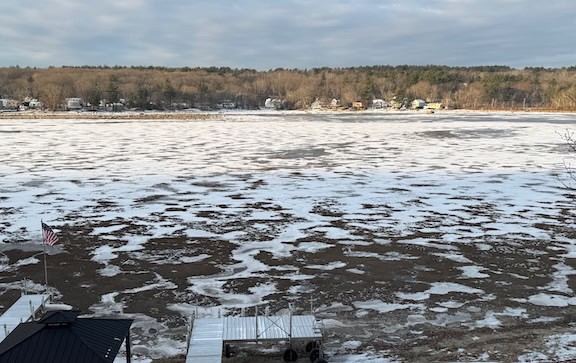
Nature’s method of controlling invasive weeds is most effective when there is an extended drawdown, temperatures remain cold, and there is little snow cover. However, it’s rare for all three conditions to align perfectly. The last time it happened was the winter of 2015-16. Our collective fingers are crossed that the extended drawdown is successful this winter. So far, so good!
How the Extended Drawdown Works
The extended drawdown lowers Lake Maspenock by 8 feet below normal levels. The annual drawdown is 5 feet. The extra depth exposes more lakebed and root systems. The removal of deeper water reveals invasive plant roots that typically remain underwater. Roots remain protected under regular drawdown conditions. The extended drawdown removes this natural insulation.
Exposed sediments are subject to direct freezing temperatures during winter. Ice crystals form inside plant cells. These crystals rupture root tissues and destroy underground stems. Cold air also dries out exposed plant material. This desiccation process stresses and kills root systems. Dead roots cannot regenerate strong growth in spring.
Minimizing Impact On The Lake Ecosystem
The extended drawdown occurs (for the most part) every three years. The reason is that a deep drawdown stresses the lake’s ecosystem. It dries out large areas of sediment, can harm some native plants and animals, and may increase erosion or sediment movement when the lake refills. Spacing the extended drawdowns three years apart allows the lake more time to recover between these aggressive events, protecting fish habitat, native vegetation, and overall water quality.
The Critical Role of Weather Conditions
Effective natural weed control requires specific winter conditions:
- Sediments must stay exposed for 6 to 8 weeks
- Temperatures need to drop below freezing repeatedly
- Cold snaps should occur during the coldest winter months
Snow cover reduces freezing effectiveness. Snow acts as an insulating blanket over the lake bottom. This insulation keeps sediments warmer and protects weed roots from fatal cold. The extended drawdown targets invasive species like variable milfoil and fanwort. These plants create dense underwater tangles. The weeds interfere with boating, swimming, and shoreline access. Natural freezing across large weedbed areas protects water quality for residents and wildlife. This timing maximizes weed control while managing lake ecology.
Milder winters reduce freezing effectiveness. Increased snow cover has become more common. These climate patterns make the extended drawdown strategy even more critical. The deeper 8-foot drawdown compensates for warmer conditions. More exposed sediment increases the chances that roots will freeze. This adjustment helps maintain weed control despite changing weather.
Community Benefits
Successful winter freezing creates clearer water the following summer. Residents report better boating conditions after cold winters. Lakefront property owners see less dense weed growth. Swimmers enjoy improved shoreline access.
The Lake Maspenock Preservation Association monitors weed populations each year. The Lake Maspenock Weed Management & Control Advisory Group, commonly referred to as the Citizens Input Group (CIG), or the “weed committee,” is a resident-led committee that advises the town (DPW, Select Board & Conservation Committee) on controlling aquatic weeds. This is achieved through various methods, with a focus on public participation and plan buy-in among town officials to adjust management strategies.
In 2024, after every option in the “toolbox” had been ruled out, the CIG proposed an herbicide treatment as a last resort. The town approved, and, by all accounts, the treatment was successful.
Supporting Natural Weed Control
Residents can help maximize drawdown effectiveness:
- Avoid using lawn fertilizers containing phosphorus near the shoreline: currently, the level of phosphorus is low—let’s keep it that way! All the water tests can be found here
- Report dense weed patches to the LMPA or DPW
- Attend public meetings about lake management
- Support extended drawdown maintenance budgets
The extended drawdown remains Hopkinton’s best defense against lake weeds. Combined with cold weather and minimal snowfall, this natural approach helps protect Lake Maspenock’s health. The strategy reduces reliance on chemical treatments while maintaining healthy water conditions for the community. It’s a straightforward approach: less snow, more cold, better weed control.



Excellent explanation. Thanks.
This!!
Avoid using lawn fertilizers containing phosphorus near the shoreline: currently, the level of phosphorus is low—let’s keep it that way!
We all need to do our part in this. Perfectly green lawns are fake performative nonsense and not worth the risk of having to poison our lake again with toxic chemicals.