 HopNews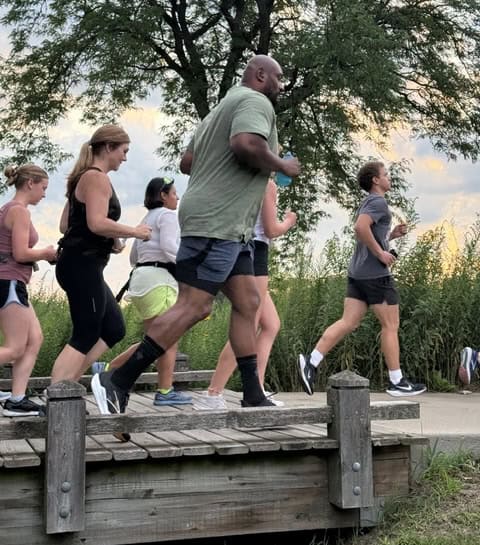
Otis Hudson’s Second Wind
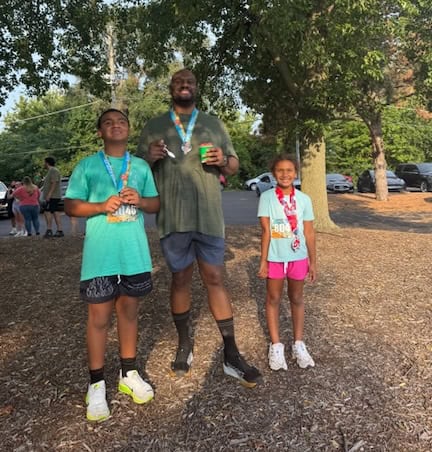
When former NFL offensive lineman Otis Hudson lined up for the Bank of America Chicago Marathon, he wasn’t chasing a medal — he was chasing health, balance, and presence.
Hudson, 39, once weighed 396 pounds after years of life on and off the field. Drafted by the Cincinnati Bengals in 2010, he played until 2013. He played briefly for the Kansas City Chiefs in 2014.
He then traded in his shoulder pads for spreadsheets, building a career in finance. Today, he lives in Naperville, Illinois, and is a husband and father of two.
When the Pandemic Hit, Everything Slowed Down
“During COVID, we were home watching all these food shows, trying new restaurants, just enjoying family time,” Hudson says. “Before I knew it, I was eating more and moving less. I got pretty big, and I didn’t feel like myself anymore.” At nearly 400 pounds (he’s 6’5”), he knew something had to change.
He told his wife, “I don’t know what it is, I just don’t feel like me,” he recalls. “So, I decided to try something different.”
He downloaded a Nike running app, laced up, and started shuffling around his block. At first, he could barely run a quarter mile. Each day became a test: could he go a little farther, stay out a little longer? The weight began to come off, slowly, steadily, and his energy began to return.
“Running started as a way to lose weight and feel better,” he says. “But it helped me show up more for my family. I feel more present, not just physically, but mentally.”
A New Playbook
Hudson was raised in Chicago after his family moved north from Mississippi. Showing natural athletic talent, he earned a scholarship to the University of Minnesota before transferring to Eastern Illinois University, where his impressive size and determination drew the attention of the Cincinnati Bengals. He was selected by the Bengals in the fifth round as the 152nd overall pick in the 2010 NFL draft.
He played offensive guard for the Bengals from 2010 to 2013, then had a brief stint with the Kansas City Chiefs in 2014. After his time in the NFL, Hudson shifted his focus to his family, saying, “I just wanted to be a dad. That became my priority.” He began a new career in finance, but he let his physical health lag behind.
By 2022, determined to reclaim his health, he entered his first Chicago Marathon. He didn’t finish that year. “My feet were killing me,” he said. “I wasn’t wearing the right shoes, and after so many hours on my feet, I just couldn’t keep going.”
Instead of giving up, Hudson regrouped. He joined the Naperville Running Company’s local run club and hired a coach to help him train smarter. The progress was steady and grounded. Today, he weighs about 310 pounds, down by more than 80 pounds from his peak.
From the Locker Room to the Finish Line
Running, Hudson says, gave him back the camaraderie he once felt in the NFL, but with a different rhythm. “In football, everyone in that locker room has one goal,” he explains. “You’re playing to provide for your family and to keep everyone healthy; you don’t want anybody getting hurt. That’s the bond.”
In running, he’s found, everyone’s chasing their own purpose, some to lose weight, some for competition, some for peace. The goals differ, but the drive is universal: keep moving forward.
Running Home
For Hudson, running through the streets of Chicago is about more than fitness; it’s a return to where it all started. He says the neighborhoods along the course bring back memories of his younger years, especially when he runs the Chicago Half Marathon, which passes John Marshall High School, the field where he once practiced football. Running along those streets reminds him of his early days in the sport—and how far life has carried him since.
The Road Ahead
Hudson says that next year he may either rerun Chicago, hoping to qualify for Boston, or he’ll try to get into the New York City Marathon. Both goals, he explains, are less about prestige and more about progress, measuring how far he can go when he believes in himself.
“It’s not about being the fastest,” he says. “It’s about showing up for yourself and not quitting when it gets hard.” From NFL stadiums to marathon miles, Otis Hudson has learned that the real game is endurance, the ability to keep moving long after the crowd goes quiet. When he crossed the start line in Chicago, he’ll already have what he came for: a second wind and a stronger, more present version of himself. He finished the Chicago marathon.
Congratulations to Otis Hudson, job well done!
Dr. Maria Bendeck is a board-certified internal medicine physician, freelance writer, world traveler, avid marathon runner, and community builder. She believes in embracing life to the fullest by exploring new places, helping others, and empowering people through writing.



0 Comments