 HopNews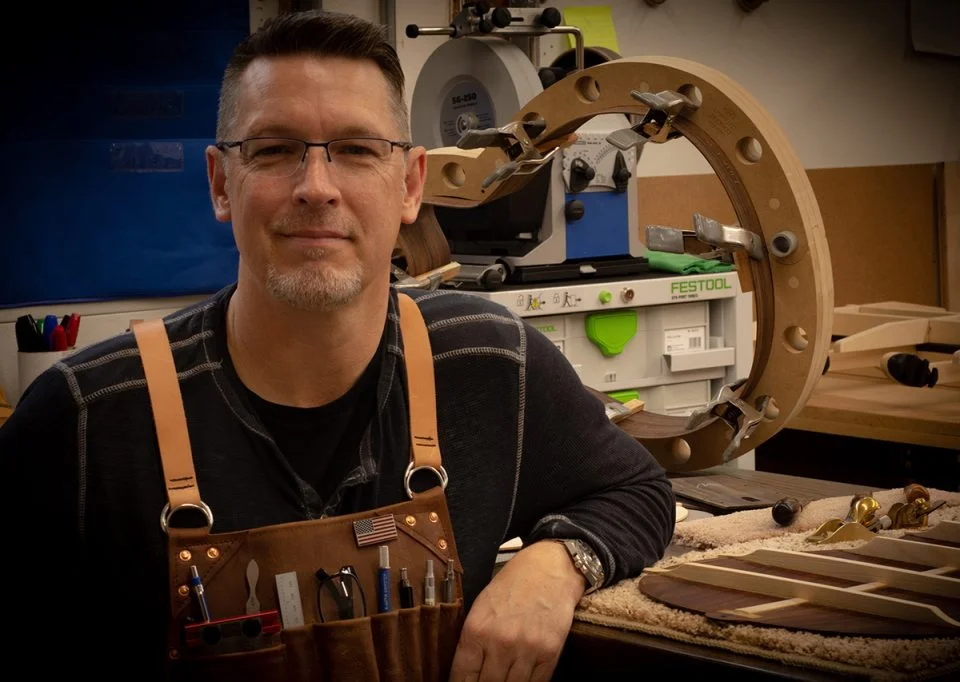
In an unassuming house on Connelly Hill, Hopkinton’s Patrick Morrissey toils away in his three-car garage now converted to a workshop. Deep into the night he tinkers, sometimes spending weeks making small adjustments, until the design – and the sound – is just right. It is unglamorous work, but the finished product is undeniable: A custom guitar that both looks and sounds extraordinary.
The art of lutherie, which refers to the crafting of stringed instruments such as violins, guitars, and cellos, has a long and rich history. While it is difficult to determine the exact identity of the first luthiers, the origins of this craft can be traced back several centuries.
Morrissey grew up outside of Springfield, the son of a woodworker who taught Patrick to work with his hands and tools from the age of 8. In college he trained as a graphic designer and worked in the advertising industry before returning to work alongside his father making furniture. He stumbled into guitar making, he says. “I wanted to play guitar, and I wanted a really good guitar but I couldn’t afford it. I realized ‘hey, this is wood’, and I knew how to work with wood. I quickly found out it’s a lot more difficult than making a table.”
In 2001 he joined a small guitar making shop in Boston, working nights and weekends as an apprentice. Soon after he struck out on his own and created Morrissey Guitars.
Today, Morrissey practices a craft that was long ago replaced by the work of machines. There are hundreds, if not thousands, of guitar manufacturers, and many produce a quality product. But the economies of scale are inherently limiting; they cannot support the needs of the most discerning musician, who are often chasing a certain sound, and not just any sound, but a signature sound. Think Clapton, Santana, and B.B. King. From the moment they play the first note their sound is instantly recognizable, and it becomes part of their brand. Every guitar player dreams of owning that kind of sound.
Those musicians turn to Morrissey, who works with them to create a custom guitar built for them and their unique playing style. Some players like a big bodied guitar, which projects sound well and is designed for a heavier playing style. Some are fingerpickers, who prefer a smaller body that is more suitable for softer play.
What stands out about Morrissey’s product is that you can hear every individual string clearly. The term “muddy sound” in relation to guitars typically refers to a lack of clarity or definition in the tone. There can be several reasons why a guitar might sound muddy, from engineering defects to worn-out strings. These cause the strings to vibrate improperly, leading to a loss of clarity.
“One of the key differences between a good and bad guitar is the muddiness,” said Morrissey. “You’ll hear it and say ‘OK, that sounds like a guitar’ but you won’t hear the individual strings and notes. I work really hard to make my guitars articulated and focused.”
As for how he does that, Morrissey says he spends a lot of time with different bracing patterns and adding wood or taking it away until it sounds right to him. (For the non-luthiers in the audience, the braces are the pieces of wood that sit inside the body of a guitar and reflect the sound as the strings are strummed).
To illustrate the clarity of a Morrissey guitar, readers are encouraged to watch this video of Tony McManus, who is considered by many to be the best living Celtic guitarist.
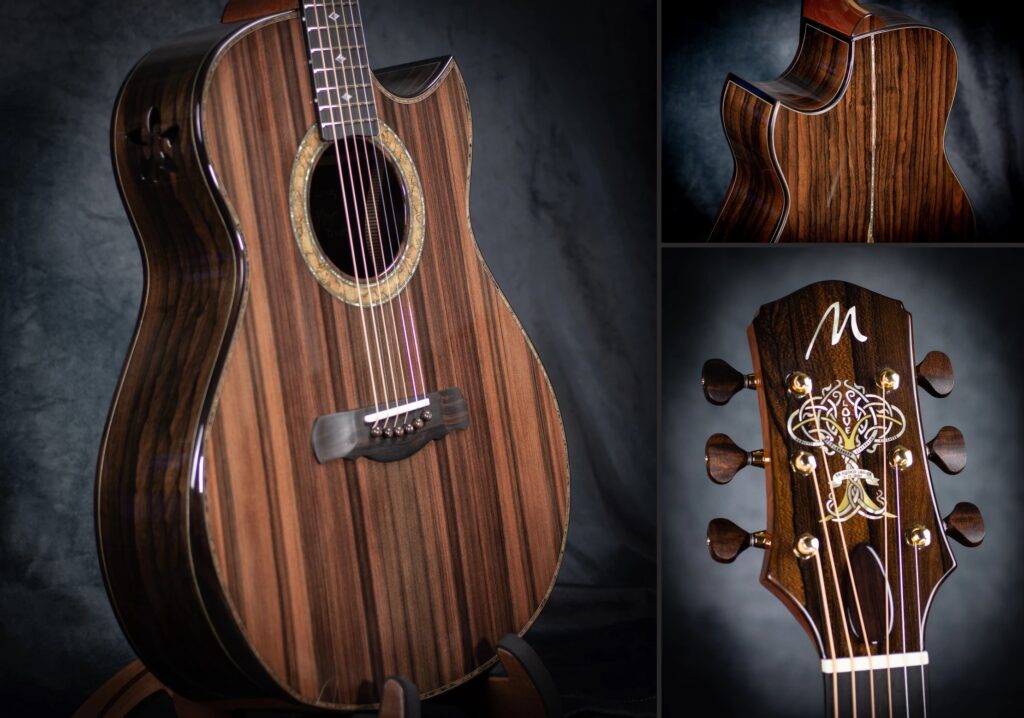
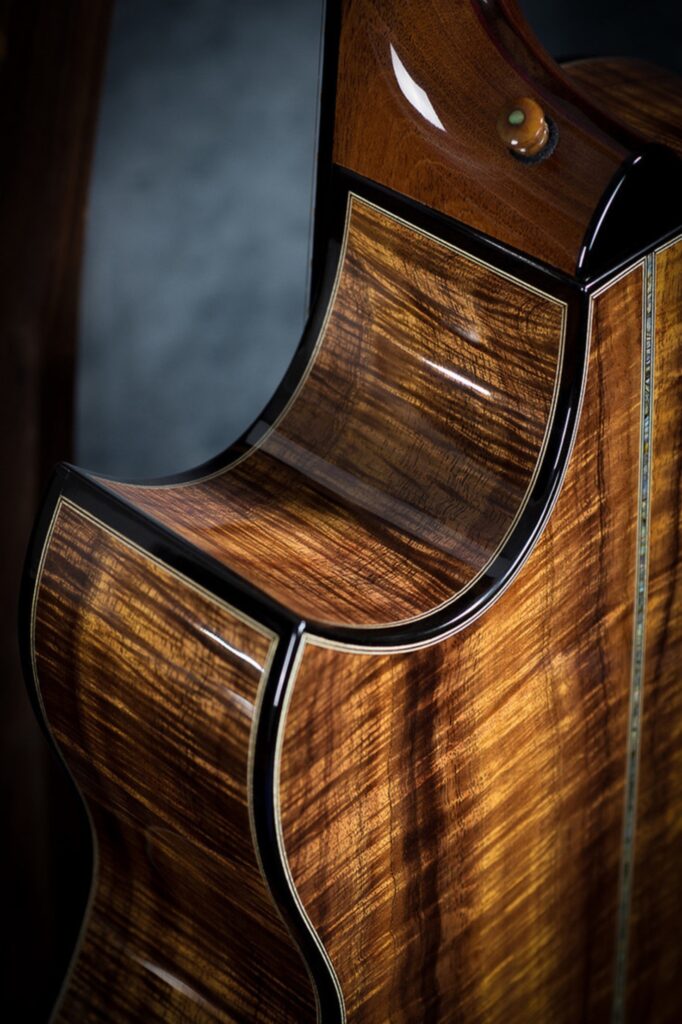
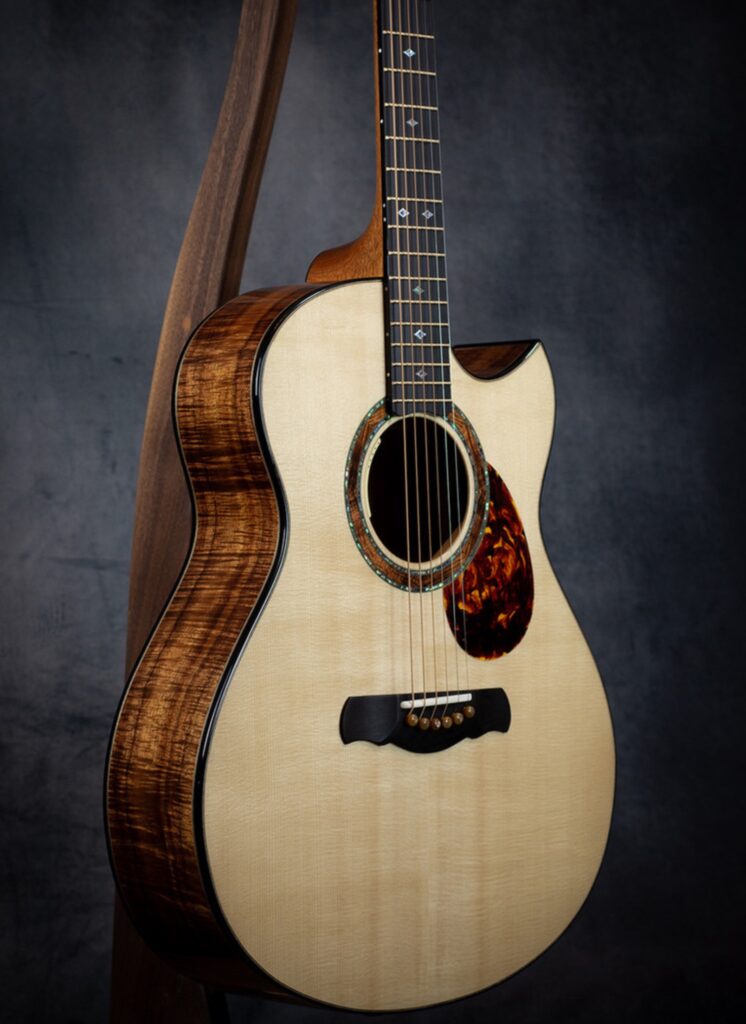
Morrissey’s shop is filled with an incredible variety of wood, from mahogany, cocobolo, rosewood, Swiss spruce, cedar, and more. Each guitar incorporates multiple types of wood into the finished product; cocobolo for the body and spruce for the top, for example. The fretboard is often finished with abalone inlays for markers.
Due to his rising notoriety as a skilled craftsman, Morrissey’s delivery pipeline is growing longer by the day. He says that he’s now 10-12 months out from delivery for all new orders. He is considering taking on an apprentice to help him with the workload, but also recognizes the difficulty of hiring for this position.
“I think it takes a unique personality, because when I’m adjusting the voicing for an instrument, I find myself sitting at the bench for hours with a chisel adding to a tiny pile of dust shavings. Who in their right mind thinks that’s a good day of work?” he asked with a laugh.



So very proud of you!
Absolutely beautiful work. I have been playing, recording and touring for 30 plus years. I would like to know more about your business and opportunities. You can find my contact info below
Thanks for sharing your work
You are a genius , or at the very least, highly evolved !
Hi Gordon,
I wasn’t able to find your contact information, but would love to talk more. Please feel free to contact me at patrick@morrisseyguitars.com or call me at 617-359-1867. I look forward hearing from you.
-Patrick
clicked on this by accident. wonderful find. Beautiful work. And …. you’re local!! <3