 HopNews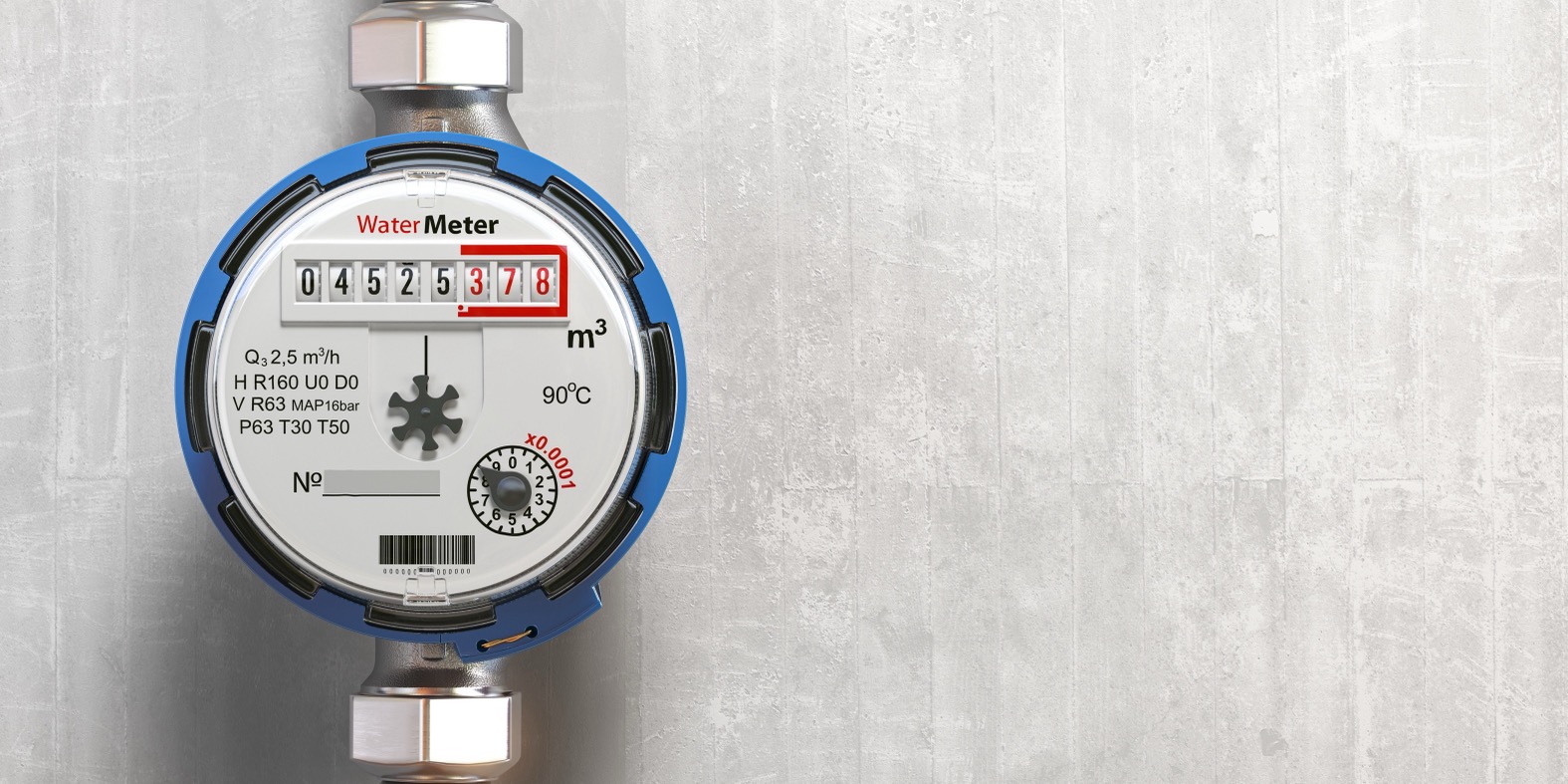
Each year the Massachusetts Department of Environmental Protection (Mass DEP) publishes a report summarizing water consumption for each town in the Commonwealth. The data is provided by the municipality, and the report is useful because it allows towns to compare their prior year performance, and also their consumption compared to neighboring towns.
The report includes two key metrics: The number of Residential Gallons per Capita Day (or gallons per day) and the Unaccounted for Water, abbreviated “UAW”. UAW is the difference between the amount of water put into the distribution system and the amount of water billed to consumers. This is measured in percentage, and differences can occur if water is lost through leaks or the incorrect calibration of meters.
Meter inaccuracies can cause a significant loss in revenue due to inaccurate billing of actual use. Over time, water meters can degrade and fail to accurately measure and register flow. This degradation can be attributed to various factors, including water quality and the specific usage conditions of the meter. Elements like the chemical composition, hardness, and the presence of abrasive materials in the water can impact a meter’s performance.
The Mass DEP approved performance standard for Unaccounted for Water is a maximum of 10%, but Hopkinton averaged 20% between 2015 and 2021. The likely culprit is malfunctioning household water meters, which, according to the American Water Works Association, should be replaced every 10 years. In some cases the water meters are more than 30 years old in Hopkinton houses.
Hopkinton DPW’s outside water quality expert is Weston and Sampson, a national firm with several Massachusetts locations. In an article published in 2016 they wrote:
Weston & Sampson was selected by the Town of Hopkinton to conduct a water audit of their system to help identify additional methods for reducing their unaccounted for water (UAW). Over the past five years the DPW has calculated UAW between 20-30%; values well above their Water Management Act Permit requirement of 10% or less. Although the DPW has taken several positive steps and implemented excellent practices under their 2010 UAW Compliance Plan, they have seen little impact to their UAW.
DPW has seen virtually no improvement in UAW since 2016. In plain terms, this means some Hopkinton houses are paying less for water and sewer than they consume.
In an email exchange, Duane Levangie, Program Chief for the Water Management Program at Mass DEP wrote “In the years 2019 – 2021, Hopkinton has had either a portion or all of their UAW values rejected due to a lack of backup documentation. While they were given the opportunity to respond with new data, it was not provided.”
DPW recently revised the 2024 water and sewer rates. Both rates are based on the consumption of water per cubic foot, an industry standard measurement but one that is not particularly consumer friendly, because most homeowners think of water in terms of gallons of use.
In the 2022 Annual Town Report, DPW stated that Hopkinton served 375,921,165 gallons of water for the year. The report also indicated that 40% of Hopkinton homes are connected to both water and sewer, and 25% are connected to water only, for a total of 65% of town residents consuming town water. Using the published rate table and the average amount of UAW per year, HopNews calculates that the town is under-billing the actual water usage by a staggering $1,242,919 per year, primarily due to inaccurate household meters.
The projected cost to replace a household meter varies, but according to several sources, is about $450 installed. Since the water meter is essentially the “cash register” for the water department, the town bears the cost of replacement. According to Hopkinton’s Water & Sewer Manager Eric Carty, replacement is typically done when a customer reports a water problem at their home, and while onsite the DPW crews replace the meter.
According to Carty, new meters are primarily digital, but the global microchip shortage has made them difficult to obtain.
Related to this, voters at the 2021 Annual Town Meeting approved $600,000 to design and build a PFAS filtration system for Fruit Street Well #6, a cost which is borne by all residents, not just the two-thirds using town water. But on May 17, 2023 Town Manager Norman Khumalo held a public forum to gather input from residents about using $1,187,000 of American Rescue Plan Act grant funds to complete the filtration system. The cost of the system is now “substantially higher,” Khumalo said. The entire amount could be paid with one year’s worth of lost revenue.
Meanwhile, leaders at Town Hall are working with their counterparts in Southborough to allow Hopkinton to connect to the Massachusetts Water Resources Authority (MWRA) and the Quabbin Reservoir, which would allow the town to decommission their local wells and increase supply. But if Hopkinton is allowed to connect to the MWRA, the Water Resources Commission is likely to impose strict conditions on the town. One sanction may be to reduce the amount of UAW, as it is significantly above the state standard. Most recently this happened in Burlington, MA when they connected to the MWRA. Burlington then implemented strict water conservation restrictions.
While Hopkinton is not the only town in the state that exceeds the Mass DEP performance standard of 10% for UAW, it is substantially higher than some of its neighbors: Over the same period of time, Milford averaged 11%, Southborough 13% and Marlborough 10%, according to the Mass DEP report.
“We perform leak detection frequently and recalibrate the master meters annually,” said Carty. “Unfortunately, UAW is a very complex problem with no simple solution.”
How We Did the Math
- Hopkinton water consumption in gallons per year (from 2022 Annual Town Report): 375,921,165
- Hopkinton water consumption in gallons per day: 1,029,921
- Average Unaccounted for Water (20%): 205,984 gallons per day
- Number of water-only customers: 1,731 paying $4.55 per 100 cubic foot
- Number of water & sewer customers: 2,779 paying $17.15 per 100 cubic foot
- Assumption: very few homes will exceed 8,000 cubic feet, so we’ll use the middle tier of published rates as the cost multiplier.
First, we convert gallons to cubic feet:
- 1 gallon = 0.133681 cubic feet.
- 205,984 gallons/day of UAW × 0.133681 cubic feet/gallon = 27,546 cubic feet/day of UAW.
Next we calculate the annual UAW in cubic feet:
- 27,546 cubic feet/day × 365 days/year = 10,054,361 cubic feet/year of UAW.
Now we calculate the percentage and cubic feet/year of UAW for water-only customers:
- (1,731 customers / 4,501 total homes) = 38% x 10,054,361 cubic feet/year = 3,820,657 cubic feet/year of UAW for water-only customers.
Next we calculate the percentage and cubic feet/year of UAW for water & sewer customers:
- (2,779 customers / 4,501 total homes) = 61% x 10,054,361 cubic feet/year = 6,233,704 cubic feet/year of UAW for water & sewer customers.
Now calculate the total UAW at the appropriate rate ($4.55 per 100 cubic feet for water only customers and $17.15 per 100 cubic feet for water & sewer customers):
- (3,820,657 ÷ 100 cubic feet) x $4.55 = $173,839 for water-only customers
- (6,233,704 ÷ 100 cubic feet) x $17.15 = $1,069,080 for water & sewer customers
Add both amounts to arrive at the total loss for both groups combined. This is the potential revenue that could be collected.
- $173,839 + $1,069,080 = $1,242,919
So, the annual cost for 205,984 gallons per day of UAW for all the homes would be $1,242,919.



I’d actually argue that the underlying assumption is faulty.
Not all water usage in the system is consumed. You mention leaks – this is definitely a problem within Hopkinton. There have been a number of large water main breaks over the past few years.
Another area of ‘not accounted’ usage would be things such as construction and emergency use. Construction should be being billed for water usage, however, it might not be accurately accounted based on lack of documentation provided to MassDEP. Emergency usage, with lack of proper documentation, would also fall under UAW.
You also calculate this using solely the residential rates. It probably would be a different number if you divided the UAW/day based on the percentage of zoning districts. Commercial use is calculated and rated differently – these calculations assume 100% if the UAW is residential.
This might be a good thought experiment and basis of a discussion, it needs further study to come to any solid conclusions.
You raise interesting points without providing any supporting evidence.
The article mentions that DPW does frequent leak detection. I don’t recall major water main breaks, but even so, how much could that move the needle in terms of loss per year?
Don’t construction sites get temporary utility meters installed at the job site?
Hopkinton is primarily residential and agricultural.
A good source for water main issues is here:
https://groups.google.com/a/hopkintonma.gov/g/watersewer
I should have linked to this previously – I apologize.
Very interesting article.
Doing a quick Google:
https://hopkintonindependent.com/discolored-water-possible-after-water-main-break-on-wood-street/
https://patch.com/massachusetts/holliston-hopkinton/hopkinton-water-main-break-will-shut-water-several-hours
https://groups.google.com/a/hopkintonma.gov/g/hopnotices/c/PvdxmLY9bQU
There are other news articles out there, but these were the first stories that came up.
Additionally:
https://www.hopkintonma.gov/departments/department_of_public_works/water_and_sewer/index.php
(“Please be advised that due to a power issues, that should now be repaired, the Ashalnd pump that supplies Hopkinton was shutting off and on rapidly causing major discoloration. Multiple hydrants are flushing in the area to try and clear the issue. It is taking longer than normal because the the power outages have been spread out. Hydrants will remain running until the water clears. The town is working with our engineers to figure out the solution to help permanently solve the issue in that area.” – Status as of 2:15 PM, October 5, 2023)
I don’t know intimate details of Hopkinton’s water system. However, I did a little research and came up with a typical municipal water supply main is 8″ – 12″ in diameter. The typical pressure in a municipal water main is 70 – 100 PSI. Using Bernoulli’s equation, we get approximately 4,857.2 GPM when there is a break from 70 PSI to 14.7 PSI (1 atmosphere). Although it may seem like a rounding error in the long run, it is still a significant amount when taken into the calculations that HopNews has provided.
I don’t know much about how water is used at construction sites, but I do know that documentation can be rejected for various reasons by the state.If the documentation isn’t accepted, DEP would count that usage as unaccounted usage.
Looking at the rate table, the type of usage isn’t actually taken into account. I apologize for the confusion.
Haven’t used Bernoulli’s equation since college, nice going.
We should be paying less for water in Hopkinton as it isn’t even drinkable thanks to contamination by PFAS.
SOME PEOPLE ARE HAVING TROUBLE WITH USING IT FOR CLEANING,TOO.
The American Water Works Association maintains a repository of relevant information on this subject at https://www.awwa.org/Resources-Tools/Resource-Topics/Water-Loss-Control#9681336-technical-resources While they are often cited in informal discussions, percentage-based performance indicators are discouraged by AWWA as they are easily manipulated and are not directly actionable by water utilities. For example, one can make the percentage UAW lower by simply selling more water without doing anything to reduce the volume of leakage from a water system. More importantly, the percentage says nothing about where the NRW is coming from (Is it leakage or inaccurate meters, or some mix of both, plus legitimate unbilled uses?) A more actionable approach described in AWWA’s Manual M36 – Water Audits and Loss Control Programs is to use the M36 water loss audit methodology, as the Town’s consultants have been doing, to improve the validity of underlying data, document how the data is developed, calculate the components of non-revenue water including unbilled authorized uses as mentioned in this thread, and water loss – both real (primarily leakage) and apparent (primarily customer meter inaccuracy), and place a monetary value on them, as this article’s author has attempted to do. Then, once the costs of interventions are known, an informed decision can be made on how to cost-effectively reduce non-revenue water to an economic level, at which the expense of the interventions are equal to the value of the lost water. More States are adopting the AWWA M36 Methodology and non-percentage-based KPIs and offering technical assistance to water systems, while tying financial assistance (and in some States permits for additional water supplies) to water loss performance. Hopefully, Mass DEP will follow.